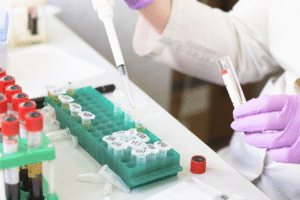
Inside every cell, timing matters. Growth, division, and repair all depend on precise control. The proteins that manage these events work in repeating cycles, ensuring that each stage follows the next without error. One of these key regulators is Cyclin B1, a protein that signals when a cell should prepare for division. To study this critical step, researchers rely on tools that can accurately detect Cyclin B1 levels and changes.
This is where custom polyclonal antibody production becomes valuable. Through careful design and testing, it provides the flexibility and accuracy needed to observe Cyclin B1 activity in real time.
Understanding Cyclin B1 and Its Role in Cell Cycle Control
Cyclin B1 is a checkpoint marker. It helps regulate the transition from the G2 phase (growth and preparation) to the M phase (mitosis). When Cyclin B1 binds to its partner CDK1 (Cyclin-Dependent Kinase 1), the complex triggers the start of cell division.
Key functions of Cyclin B1 include:
- Initiating chromosome condensation
- Supporting spindle formation
- Ensuring controlled entry into mitosis
- Maintaining genomic stability
Because Cyclin B1 levels rise and fall in a defined rhythm, detecting its presence accurately can show whether cells are dividing normally or out of control. Overexpression or misregulation of Cyclin B1 often appears in cancer cells, making it a valuable marker for both research and diagnostics.
What Makes Custom Polyclonal Antibody Production Different
A custom polyclonal antibody is created specifically for one target protein, using a chosen antigen sequence. The process begins with designing a peptide that matches a unique region of the target, in this case, Rabbit Cyclin B1 Polyclonal Antibody. This peptide is used to immunize an animal, such as a rabbit, allowing its immune system to produce a mix of antibodies that recognize different epitopes on the same protein.
Custom production offers several advantages:
- Precision design: The antigen sequence is selected to avoid unwanted cross-reactivity.
- Broad binding coverage: Multiple epitopes ensure strong signal detection.
- Adaptable design: Antibodies can be tailored for Western blot, ELISA, or immunostaining.
- Reproducibility: The antigen and process are fully documented for future production.
Reliable Detection for Protein Studies
Accurate protein detection depends on both sensitivity and specificity. Custom polyclonal antibodies bring both qualities to the study of Cyclin B1. They enable:
- Western blotting: To confirm protein expression levels and detect cell cycle phase transitions.
- Immunofluorescence: To visualize Cyclin B1’s movement from cytoplasm to nucleus during mitosis.
- ELISA assays: For quantitative measurements across large sample sets.
- Immunohistochemistry: To track Cyclin B1 expression in tissue models and cancer biopsies.
The Value of Customization in Complex Research
While general antibodies can be effective for routine use, research involving cell cycle regulators often demands precision. Small differences in Cyclin B1’s structure, or in the timing of its expression, can alter results.
With custom polyclonal antibody production, researchers can:
- Choose target regions based on their study focus
- Adjust the antibody’s purification and conjugation process
- Develop species-specific versions for dual labeling
- Request HRP, fluorescent, or biotin labeling for different detection platforms
Applications Beyond the Cell Cycle
Cyclin B1 is central to division, but its regulation also connects to broader biological themes. Researchers studying:
- Cancer growth
- Embryonic development
- Neurobiology
- Drug response
Final Thoughts
Every phase of cell division depends on accurate molecular timing. Cyclin B1 helps control this timing, guiding cells safely through mitosis. To understand how that control succeeds or fails, scientists need clear, reproducible tools.
Custom antibody design ensures that each result reflects real biological activity, helping move science toward deeper understanding of cell behavior and its impact on health and disease.