
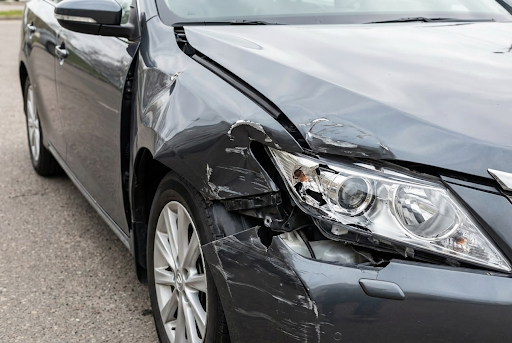
Understanding what causes car accidents the most enables evidence-based prevention strategies statistically reducing accident probability. Florida crash data spanning 125,000+ annual accidents reveals specific cause patterns—from speeding and distraction to mechanical failure and environmental factors—allowing drivers to address quantifiable risk sources through behavior modification and vehicle maintenance.
Ranked Accident Causes (Florida 2023 Data)
- SPEEDING (38% of all accidents)
- Fatal accidents: 45% involve speeding
- Injury accidents: 38% involve speeding
- Property-damage only: 35% involve speeding
Speed-related severity multiplier:
- 35 mph → 45 mph impact = 65% deadlier
- 45 mph → 55 mph impact = 48% deadlier
- 70 mph → 80 mph impact = 56% deadlier
Exceeding posted speed limits reduces braking effectiveness, increases stopping distance exponentially, and amplifies collision energy. Small speed increases lead to disproportionate escalation of danger.
- DISTRACTED DRIVING (28% of all accidents)
- Cell phone usage: 19%
- Eating/drinking: 6%
- Passenger interaction: 4%
- Dashboard adjustment: 3%
- Grooming: 2%
Four-second average phone distraction at 70 mph = 410 feet traveled blind. Lane positioning, speed management, and hazard detection all disabled simultaneously.
- FAILURE TO YIELD RIGHT-OF-WAY (18% of all accidents)
- Intersection turns: 45% of yield violations
- Merge errors: 32%
- Pedestrian/bicycle underestimation: 15%
- Parking lot backing errors: 8%
Drivers consistently misjudge approaching vehicle speed, mistakenly believing they have adequate time to cross. Aggressive acceleration compensation fails against physics reality.
- IMPROPER LANE CHANGES (15% of all accidents)
- Blind spot failure: 42%
- Inadequate signal time: 35%
- Cutting across multiple lanes: 18%
- Illegal lane change locations: 5%
Most drivers signal <1 second before lane change (safe standard: 2-3 seconds minimum). Truck blind spots exceed 35 feet—passenger vehicles vanish completely into these zones.
- DRIVING UNDER INFLUENCE (14% of all accidents)
- Alcohol: 8%
- Marijuana: 3%
- Prescription medications: 2%
- Cocaine/methamphetamine: 1%
Impaired driving reduces reaction time 0.5+ seconds, impairs judgment regarding braking distance, and eliminates hazard anticipation—same neurological impact as 0.08 BAC alcohol consumption across different substances.
- AGGRESSIVE DRIVING/ROAD RAGE (12% of all accidents)
- Tailgating: 6%
- Brake checking: 3%
- Cutting off intentionally: 2%
- Honking/obscene gestures: 1%
Aggressive actions designed to intimidate typically backfire—tailgating reduces braking distance safety margin, brake checking creates rear-end collision risk, cutting off forces reactive maneuvers destabilizing vehicles.
- MECHANICAL FAILURE (11% of all accidents)
- Brake failure: 4%
- Tire blowout: 3%
- Steering failure: 2%
- Engine/transmission failure: 2%
Preventive maintenance extends mechanical system reliability substantially. Brake fluid degradation, tire underinflation, and worn steering components all increase failure probability.
- WEATHER FACTORS (9% of all accidents)
- Heavy rain/hydroplaning: 5%
- Wet pavement: 2%
- Fog/low visibility: 1%
- Wind/debris: 1%
Wet pavement dramatically increases accident risk—70 mph is equivalent to 50 mph in handling capability. Tire tread depth below 4/32 inch creates aquaplaning risk.
- FATIGUE/DROWSINESS (8% of all accidents)
- Commercial drivers: 12% of fatal accidents
- Passenger vehicle drivers: 5% of fatal accidents
- Peak times: 2am-6am, 1pm-4pm
- Crash severity: Uncontrolled impact (often trees/barriers)
Drowsy driving impairs judgment equivalent to 0.08 BAC intoxication. Micro-sleeps lasting 4-5 seconds eliminate steering control at highway speeds.
- FOLLOWING DISTANCE VIOLATION (7% of all accidents)
- Inadequate spacing: 95% of drivers
- Rear-end collision result: 145,000 annual Florida accidents
- Safe distance standard: 7+ car lengths at 70 mph
- Typical distance maintained: 1.5-2 car lengths
Physics doesn’t compromise—braking distance at 70 mph equals 300+ feet minimum. Inadequate spacing = inevitable collision when leading vehicle brakes.
Accident Severity Correlation with Cause
Most Fatal Causes (Fatality Rate):
- Speeding: 45% fatal rate
- Impaired driving: 38% fatal rate
- Improper lane change: 28% fatal rate
- Failure to yield: 22% fatal rate
- Aggressive driving: 18% fatal rate
Least Fatal Causes (Fatality Rate):
- Distracted driving: 8% fatal rate
- Following distance: 6% fatal rate
- Weather: 4% fatal rate
- Mechanical failure: 3% fatal rate
Speed-related accidents generate disproportionate fatality concentration—collision energy amplifies exponentially with velocity, enabling small speed increases to create life-or-death severity differences.
Commercial Truck Accident Specifics
Truck accidents diverge significantly from passenger vehicle patterns:
Truck-Specific Causes (Higher Rate Than General Population):
- Brake failure: 15% (vs 4% passenger vehicles)
- Following distance: 22% (vs 7%)
- Driver fatigue: 12% (vs 3%)
- Improper lane change: 18% (vs 8%)
- Mechanical failure: 18% (vs 7%)
Commercial vehicles experience accelerated wear, carry heavier loads requiring extended braking distances, and operate across fatigue-inducing schedules enabling accident probability concentration.
Prevention Through Root-Cause Addressing
Speed Management:
- Reduce posted speed by 10 mph on dangerous roads
- Extend braking distance calculations (assume worst-case)
- Recognize velocity amplifies collision energy quadratically
Distraction Elimination:
- Phone in glove compartment (unreachable during driving)
- Passenger management (driver focus priority)
- Eating/grooming before departure
Defensive Positioning:
- Assume other drivers make errors (3-vehicle-ahead scanning)
- Maintain 8+ second following distance
- Check blind spots despite mirror confidence
Mechanical Maintenance:
- Quarterly brake inspection
- Monthly tire pressure verification
- Annual professional inspection
Fatigue Management:
- 15-minute breaks every 2 hours
- No driving after midnight
- Recognize warning signs (yawning, eye heavy sensation)
Conclusion
Car accident causation reflects specific identifiable driver behaviors and vehicle maintenance deficiencies—not random fate. Florida accident data reveals speeding, distraction, and improper lane changes dominate accident causation. Drivers addressing these quantifiable risk sources through behavior modification, defensive positioning, and preventive maintenance substantially reduce accident probability and severity.

