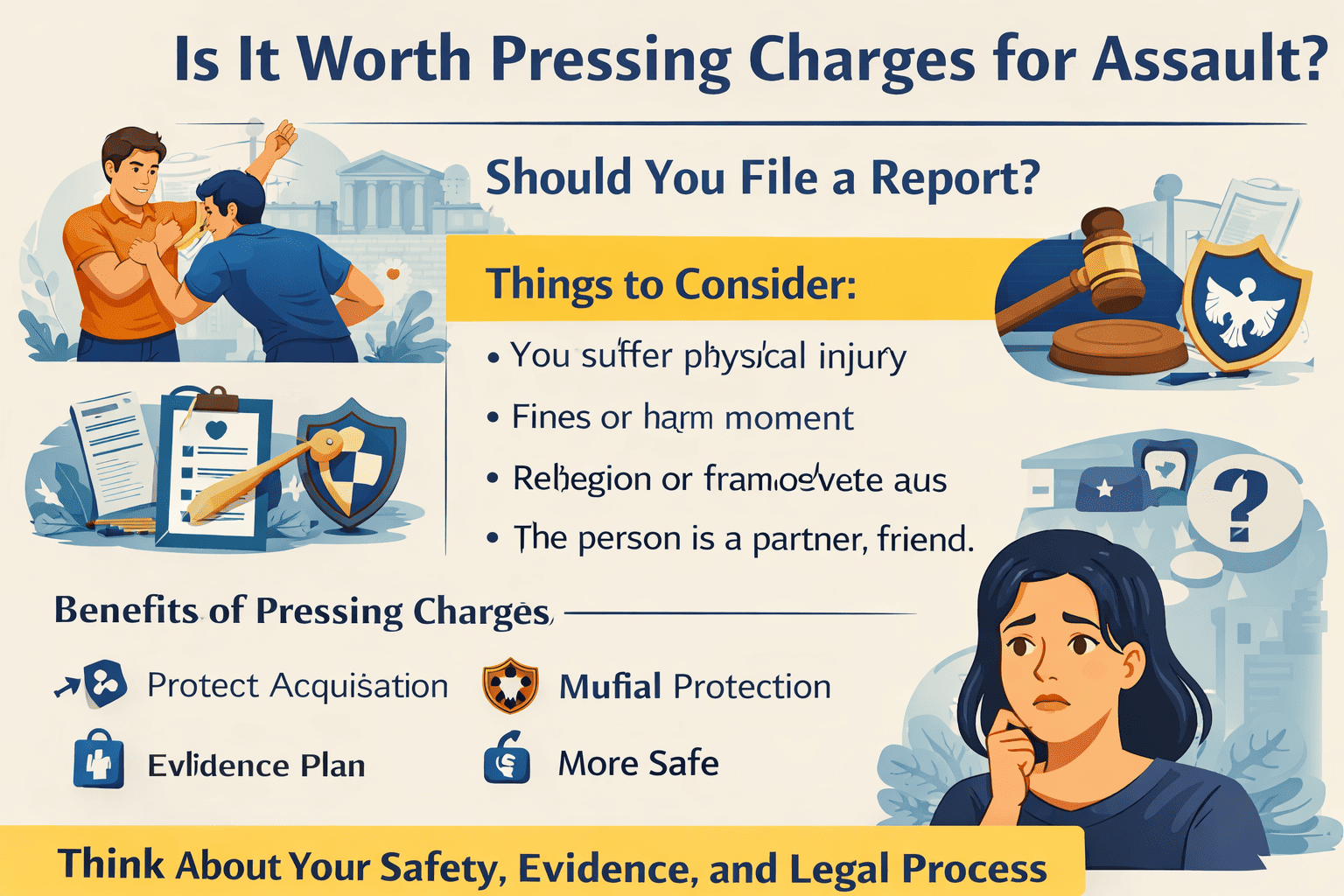
If you have been assaulted, one of the first questions that may come to mind is: is it worth pressing charges for assault? This is not always an easy decision. For some people, taking legal action brings a sense of justice and safety. For others, the idea of reporting the incident can feel stressful, emotional, and overwhelming.
The truth is that every situation is different. The right choice often depends on the seriousness of the assault, the evidence available, and whether you believe the person could hurt you again. Understanding the legal process in simple terms can help you make a more informed decision.
In this beginner-friendly guide, we’ll explain what pressing charges means, when it may be worth it, and what factors you should think about before moving forward.
What Does It Mean to Press Charges for Assault?
Before deciding is it worth pressing charges for assault, it helps to understand what the phrase actually means.
In simple words, pressing charges usually starts with:
- Reporting the incident to the police
- Giving your statement
- Sharing any evidence you have
- Cooperating if the case moves forward
Many people assume that the victim has full control over whether charges happen. In reality, once the case is reported, the prosecutor may decide whether to continue based on the facts and evidence.
Example:
If someone punches you during an argument and there are witnesses or video footage, the police may file a report. Even if you later feel unsure, the case may still move forward if the evidence is strong enough.
When Pressing Charges May Be Worth It
If you are asking is it worth pressing charges for assault, there are several situations where the answer may be yes.
It may be worth it if:
- You suffered physical injuries
- The assault was intentional and serious
- You are afraid it could happen again
- The person has a history of violence
- You need legal protection
- You want an official record of the incident
Creating a formal record can be important, especially if the same person continues threatening or harming you later.
Benefits of Pressing Charges for Assault
There are several reasons why someone may choose to move forward.
1. It Holds the Person Accountable
One major reason people ask is it worth pressing charges for assault is because they want the person to face consequences.
Possible legal outcomes may include:
- Criminal charges
- Fines
- Probation
- Mandatory counseling
- Jail time in serious cases
For many victims, accountability is an important part of healing.
2. It May Prevent Future Harm
If the assault is never reported, the person may repeat the same behavior. Filing a report can help protect:
- You
- Your family
- Coworkers
- Other possible victims
This is especially important when there is a pattern of aggression or threats.
3. It Can Help With Protective Orders
In some cases, reporting the assault can support requests for:
- Restraining orders
- No-contact orders
- Emergency legal protection
If you want a more detailed explanation of the legal side, this guide on whether pressing charges for assault is worth it offers useful background in a simple format.
Reasons Some People Hesitate
Even when there are strong reasons to report an assault, many people still feel unsure. That is completely understandable.
Common concerns include:
- Fear of retaliation
- Stress from dealing with police or court
- Not having enough evidence
- The person is a partner, friend, or family member
- Worry about how long the process may take
These concerns are real. The legal process can sometimes feel slow and emotionally difficult. Still, knowing your rights can make the situation easier to manage.
Important Things to Consider Before Deciding
If you are still wondering is it worth pressing charges for assault, here are the most important things to think about.
Severity of the Assault
Ask yourself:
- Were you physically hurt?
- Did you need medical attention?
- Was a weapon involved?
- Are you dealing with emotional trauma?
The more serious the assault, the stronger the reason to consider legal action.
Available Evidence
Evidence can make a big difference in how strong the case is.
Helpful evidence may include:
- Photos of injuries
- Medical records
- Witness statements
- Security camera footage
- Text messages or threats
- Police reports
Even if you do not have everything, reporting quickly can help preserve important details.
Personal Safety
Your safety should always come first.
If you think the person may hurt you again, you may want to:
- Contact law enforcement immediately
- Stay somewhere safe
- Save all communication
- Ask about a protective order
- Inform trusted friends or family members
Emotional Readiness
Some people feel stronger after taking action. Others feel anxious about retelling what happened in court or to investigators.
That is why it is important to think not only about the legal side, but also about your emotional well-being.
What Happens After You Report an Assault?
Many people feel less anxious once they understand the process.
Common Steps Include:
- You file a police report
- Police collect evidence and statements
- A prosecutor reviews the case
- Charges may be filed
- Court hearings may happen
- The case may end in dismissal, plea deal, or trial
Not every case goes to trial. Some are resolved earlier, depending on the facts.
A Realistic Example
Imagine someone attacks you in a parking lot after an argument. You have:
- A visible injury
- A witness who saw it happen
- Video footage from a nearby camera
In this situation, asking is it worth pressing charges for assault often leads to a strong yes because:
- There is clear evidence
- There is physical harm
- The incident is documented
- Legal action may help prevent repeat violence
Should You Speak With a Lawyer?
Not every assault case requires a private attorney, but it can still be helpful in certain situations.
You may want legal guidance if:
- The assault caused serious injury
- The attacker knows you personally
- You fear future retaliation
- You may want compensation for damages
- The case involves domestic violence or workplace issues
If you like reading practical legal and informational content, you can also explore useful legal awareness articles for more beginner-friendly insights.
Conclusion
So, is it worth pressing charges for assault? In many situations, yes—especially if the assault caused harm, created fear, or may happen again. Reporting the incident can help build a legal record, support your safety, and hold the other person accountable.
At the same time, this is a personal decision. You should consider your safety, the available evidence, and your emotional readiness before moving forward. If you are unsure, speaking with law enforcement, a victim advocate, or a legal professional can help you understand the best next step.
The most important thing is that you know your options and make the choice that feels right for your situation.
FAQs
1. Is it worth pressing charges for assault if there are no major injuries?
Yes, it still can be worth it. Even minor assault can create a legal record and help prevent future harm.
2. Can the case continue if I change my mind?
In many cases, yes. Prosecutors may continue if the evidence is strong enough.
3. What evidence is useful in an assault case?
Photos, witness statements, medical records, texts, threats, and security footage can all help.
4. Do I need a lawyer to press charges?
Not always, but legal advice can be helpful in serious or complex cases.
5. Can pressing charges help me get a restraining order?
Yes, in many situations, a police report or criminal case can support a protective order request.