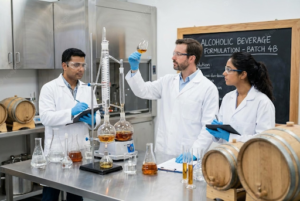
Creating exceptional alcoholic beverages requires sophisticated formulation expertise that balances flavor, alcohol content, stability, and regulatory compliance. From craft cocktails to innovative hard seltzers, successful alcoholic beverage formulation combines food science principles, creative innovation, and practical manufacturing knowledge. Understanding how professional alcohol formulation services work helps brands appreciate the complexity involved and make informed decisions when developing new alcohol products. Whether formulating premium spirits or ready-to-drink beverages, expert spirits recipe development transforms concepts into commercial products that consumers love.
Understanding Formulation Fundamentals
- The Role of Alcohol in Beverages – Alcohol profoundly affects beverage characteristics beyond just providing intoxication. It impacts flavor perception, mouthfeel, stability, and preservation. Alcoholic drink formulation experts understand how different ABV levels affect the overall balance of the product and adjust other formula components accordingly.
- Balancing Flavor Components – Successful formulations achieve harmony among multiple flavor elements including sweetness, acidity, bitterness, and aromatics. Alcohol formulation services employ systematic approaches to develop balanced profiles that satisfy target consumer preferences while meeting brand positioning objectives.
Key Formulation Considerations
- Ingredient Selection Strategy – Choosing appropriate ingredients forms the foundation of alcoholic beverage formulation. Base spirits, flavor systems, sweeteners, acids, and functional ingredients must work together harmoniously. Spirits recipe development professionals leverage deep ingredient knowledge to select components creating desired characteristics.
- Managing Alcohol Perception – High alcohol content can create harsh burning sensations that detract from enjoyment. Expert alcoholic drink formulation includes strategies for softening alcohol perception through ingredient selection, sweetness balancing, and flavor layering that creates smooth drinking experiences.
Formulation for Different Categories
- Ready-to-Drink Cocktail Formulation – RTD cocktails must capture authentic cocktail flavors in stable formats. Formulation addresses challenges like flavor degradation over time, ingredient separation, and maintaining quality across variable storage conditions. Alcohol formulation services for RTDs balance authenticity with shelf-stable requirements.
- Hard Seltzer and Flavored Alcoholic Water – Seltzer formulation emphasizes clean, subtle flavors with appropriate carbonation levels and minimal calories. Spirits recipe development for this category focuses on delicate flavor balance, avoiding artificial tastes, and creating refreshing character that encourages consumption.
- Functional Alcoholic Beverage Formulation – Products combining alcohol with functional ingredients like adaptogens or CBD require sophisticated formulation ensuring ingredient stability, efficacy, and compatibility. Alcoholic drink formulation experts navigate the technical challenges these combinations present.
The Formulation Development Process
- Initial Concept and Benchmarking – Formulation begins with a thorough understanding of product goals and an analysis of competitive products. This benchmarking identifies opportunities for differentiation and sets targets for flavor intensity, sweetness, and overall character.
- Prototype Creation and Testing – Developing formulations involves creating multiple prototypes, each tested and refined. Alcohol formulation services employ structured sensory evaluation methods that generate objective data guiding iterative improvements toward optimal formulations.
- Stability Assessment – Alcoholic beverages must maintain quality throughout shelf life. Spirits recipe development includes conducting stability studies under various conditions to predict how formulations perform over time and identify potential degradation issues.
Technical Challenges in Formulation
- pH Balance and Preservation – Appropriate pH levels affect flavor, stability, and microbial safety. Alcoholic beverage formulation experts optimize pH through acid selection and buffering strategies while ensuring products meet safety requirements.
- Color Stability Maintenance – Natural colors can fade or shift during storage. Formulation includes strategies for protecting color stability through ingredient selection, light-blocking packaging, or antioxidant systems that prevent degradation.
- Texture and Mouthfeel Optimization – Beyond flavor, texture profoundly impacts consumer satisfaction. Alcoholic drink formulation addresses body, viscosity, and carbonation levels that create appropriate drinking experiences for different product categories.
Regulatory Formulation Considerations
- TTB Formula Approval Requirements – Most alcoholic beverages require TTB formula approval before production. Alcohol formulation services include preparing formula submissions with proper documentation ensuring regulatory compliance and avoiding approval delays.
- Ingredient Compliance and Restrictions – Not all ingredients are approved for alcoholic beverages. Spirits recipe development expertise includes knowing which ingredients are permitted, appropriate usage levels, and documentation requirements for novel ingredients.
Cost Optimization in Formulation
- Balancing Quality and Economics – Commercial success requires formulations that deliver quality while meeting cost targets. Alcoholic beverage formulation experts identify opportunities to reduce costs through ingredient substitutions or specification adjustments that maintain product integrity.
- Yield Efficiency Considerations – Formulation decisions impact manufacturing yield and efficiency. Professional alcohol formulation services develop recipes that minimize waste and optimize production economics without compromising quality.
Working with Formulation Professionals
Defining Project Scope
Successful collaborations begin with clear communication about product goals, target markets, budget constraints, and timeline expectations. This foundation ensures alignment throughout formulation development.
Leveraging Specialized Expertise
Experienced formulation consultants bring knowledge that accelerates development and prevents costly mistakes. Their expertise in spirits recipe development, regulatory compliance, and manufacturing realities provides invaluable guidance throughout the process.
Innovation in Alcoholic Beverage Formulation
- Exploring Novel Ingredients – The alcohol industry continually introduces innovative ingredients that offer unique flavors or functional benefits. Alcoholic drink formulation professionals stay current with trends, helping brands evaluate and implement emerging opportunities appropriately.
- Sustainable Formulation Practices – Consumer interest in sustainability influences formulation choices. Alcohol formulation services can incorporate organic ingredients, natural colors, and environmentally responsible sourcing into product development.
Conclusion
Alcoholic beverage formulation represents a sophisticated blend of science, creativity, and practical knowledge that transforms concepts into successful commercial products. Professional alcohol formulation services provide the specialized expertise necessary to navigate complex technical challenges, regulatory requirements, and manufacturing realities. Whether developing craft spirits, RTD cocktails, or innovative functional alcohol products, expert spirits recipe development delivers formulations that balance flavor, stability, cost, and consumer appeal. By understanding how formulation works and partnering with experienced professionals, brands position themselves for success in the competitive and dynamic alcoholic beverage market.