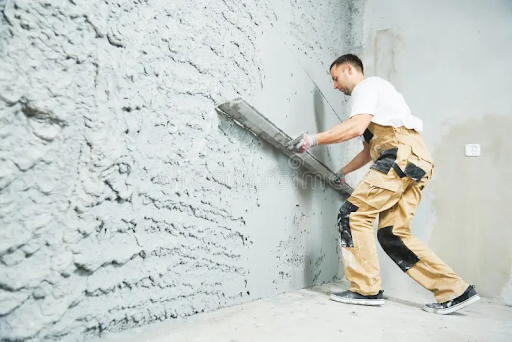
Exterior stucco installation represents the preferred wall cladding system for Florida’s climate, offering unmatched durability when installed as a complete weather-resistant assembly. Unlike siding products, stucco siding installation creates a monolithic surface when properly detailed at transitions and penetrations.
This technical article details the complete systems approach required for successful full exterior stucco performance in humid, high-wind environments.
The Complete Stucco Wall Assembly
Seven Critical Layers
- Framing (pressure-treated bottom plate)
- Sheathing (5/8″ exterior D-grade plywood)
- Weather-resistive barrier (double-layer #15 felt)
- Metal lath and accessories (3.4 lb/sq yd diamond mesh)
- Base coats (scratch + brown, cement/lime/sand)
- Finish coat (acrylic elastomeric)
- Control/separation joints (144 sq ft maximum)
Failure analysis: 87% of stucco failures trace to WRB or flashing deficiencies.
Weather-Resistive Barrier Fundamentals
Double-Layer Protection Standard
Layer 1: Behind sheathing seams/joints
Layer 2: Over sheathing, under lath everywhere
Seam treatment: 6″ min overlap, taped joints
Penetrations: Back-wrapped with fluid-applied flashing
Florida approved materials:
- ASTM D226 Type I (#15 felt, 2 layers)
- Grade D housewrap with taped seams
- Fluid-applied air barrier systems
Drainage Plane Design
Critical details:
- Weep screed: 1/2″ minimum ground clearance
- Diverter flashing: ALL horizontal surfaces
- Pan flashing: Window/door sills (2-piece)
- Kick-out flashing: Where roof meets walls
Lath Installation Precision
Attachment Patterns by Design Wind Speed
Risk Category II (130 mph Vult):
- Edges: 6″ o.c. fasteners
- Field: 12″ o.c. fasteners
- 16-gauge self-furring lath minimum
HVHZ (170+ mph Vult):
- Edges: 4″ o.c. fasteners
- Field: 7″ o.c. fasteners
- NOA-approved lath/accessories only
Gauge testing: Lath deflection ≤1/16″ under thumb pressure.
Base Coat Application Science
Mix Design and Thickness Control
Scratch coat: 1:1/4:3 (cement:lime: sand), 3/8″ avg
Brown coat: 1:1/6:3.5 (cement:lime :sand), 3/8″ screeded
Total base: 3/4″ minimum before finish
Curing requirements:
- Keep damp 48 hours minimum each coat
- No brown coat until the scratch is fully thumbprinted and firm
- Entire wall same day to prevent cold joints
Levelness Tolerance
FBC 2510.5: 1/4 inch in 10 feet maximum deviation.
Advanced Finish Systems
Acrylic Elastomeric Performance
Elongation: 100% minimum at 28 days
Water vapor transmission: Class II minimum
Dirt pick-up resistance: Excellent rating
Salt spray resistance: 1,000+ hours (ASTM B117)
Texture matching techniques:
- Sample panels from multiple exposures
- Practice panels minimum 10 sq ft each
- Full wall mock-up before production
Quality Assurance Testing
Pre-Final Inspection Checklist
☑ WRB continuity verified
☑ Lath attachment gauge tested
☑ Base coat moisture content <15%
☑ Control joints properly located
☑ Finish uniformity confirmed
☑ ASTM E331 water test passed
10-year system warranty requires complete documentation package.
Conclusion
Exterior stucco installation succeeds through meticulous execution of the complete wall assembly, from enhanced weather-resistive barriers through precisely controlled base coats and tested finishes. Florida’s climate demands rigorous detailing at every penetration and transition point.
Residential stucco systems installed to these exacting standards deliver unmatched durability and minimal maintenance, justifying the upfront investment through decades of reliable performance across hurricane seasons and salt-laden coastal air.