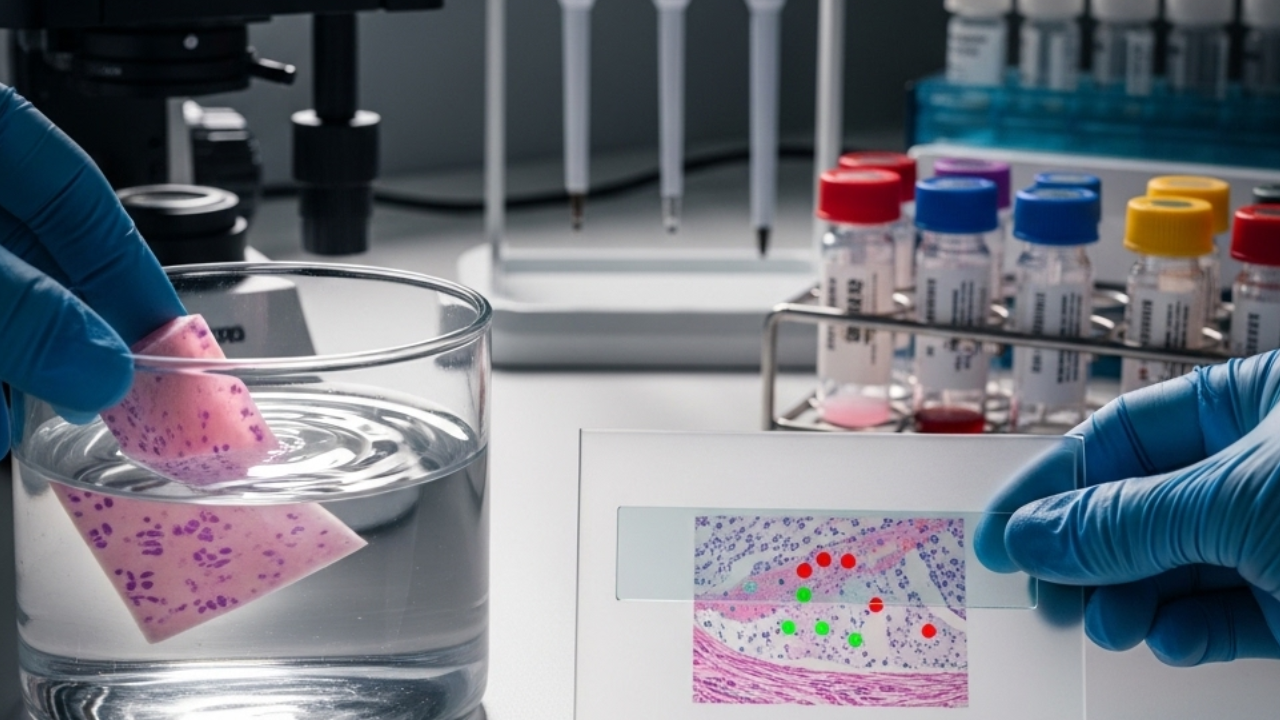
When it comes to arriving at a valid conclusion in a biological study, there is no room for incomplete and inaccurate data. This is especially important when it is a long-term study or multiple experiments are being conducted. However, producing proteins from tissues, cells, bodily fluids, or other biological sources is not feasible to meet the demands of researchers.
Limited yield is not the only issue. These native proteins also contain contaminants. They lack consistency when multiple batches are required. As they are difficult to engineer, native proteins are useful only in a limited number of applications. So, researchers cannot rely on native proteins for long-term studies and a wide range of applications.
Let’s see how recombinant human proteins overcome these limitations and serve as a more reliable alternative for studies.
Understanding Recombinant Human Proteins
Recombinant proteins are artificially produced through genetic engineering. A gene encoding a desired protein is introduced into a host organism.
The host then expresses and produces the protein in large quantities. Recombinant human proteins are a specific type of recombinant protein whose genes originate from human DNA, and these genes are subsequently introduced into a different biological system for their production.
Production
The production of recombinant human proteins for research begins with the isolation of the human gene that encodes the desired protein. The gene is then inserted into a specialized DNA molecule known as an expression vector.
The expression vector is a carrier molecule. It carries regulatory elements such as promoters and enhancers. These elements control the time and intensity of gene expression. The vector is then introduced into a host system.
Bacteria (Escherichia coli), various yeast species, insect cells, and mammalian cell lines are the commonly used host systems.
The selection of the host system is a critical decision, as it is essential to preserve the native function and stability of the protein. The host system directly impacts the folding and stability of the protein and the addition of post-translational modifications.
Inducing protein expression requires culturing of host cells under optimized conditions. The cellular machinery for gene expression reads the introduced gene and transcribes it into messenger RNA (mRNA). This mRNA is then translated into the desired protein.
The next step is protein purification, which involves the separation of protein from host cell components. The following techniques are commonly used for protein purification:
- Affinity chromatography
- Ion-exchange chromatography
- Size-exclusion chromatography
Analytical methods like Reversed-Phase High-Performance Liquid Chromatography (RP-HPLC) and Sodium Dodecyl Sulfate-Polyacrylamide Gel Electrophoresis (SDS-PAGE) are used to rigorously assess the purity of the final protein. This makes sure that the final product meets the high standards required for research.
Advantages in Research
Recombinant human proteins for research offer the following advantages:
Purity and Homogeneity
High purity of recombinant human proteins means minimum variability and minimum interference with sensitive experimental results. This helps obtain highly reliable and interpretable data.
Scalability and Reproducibility
Genetic engineering makes it possible to produce large, uniform batches of proteins which are essential for:
- Conducting high-throughput screening campaigns
- Performing preclinical studies
- Ensuring robust batch-to-batch consistency across multiple experiments or different laboratories
Safety and Reduced Contamination
As recombinant human proteins are produced in controlled expression systems, the risk of contamination due to host-derived impurities is significantly reduced. As a result, these proteins are safer for both the development of potential protein therapeutics and in vitro research applications.
Engineering Capabilities and Functional Customization
Genetic engineering allows researchers to make specific modifications to the protein’s sequence. For example, adding affinity tags facilitates highly efficient and specific protein purification.
Another example is the introduction of point modifications to precisely alter an individual amino acid sequence. These alterations help in:
- Elucidating structure-function relationships
- Investigating protein stability and folding
- Modifying or enhancing protein properties
- Studying disease mechanisms
Addressing Scarcity
Many human proteins, in their native tissues, are expressed at very low levels. It is also difficult to extract human proteins in sufficient quantities. Recombinant human proteins are produced on a large scale.
Applications in Biological Studies
Many biological studies rely on recombinant human proteins:
| Category | Applications |
| Fundamental Biology |
|
| Disease Research and Pathogenesis |
|
| Drug Discovery and Development |
|
| Diagnostics and Vaccine Development |
|
High-Mobility Group Box 1 (HMGB1) Recombinant Protein
Let’s examine High-Mobility Group Box 1 recombinant protein to illustrate the practical significance of recombinant human proteins for research.
HMGB1
Almost all eukaryotic cells contain High-Mobility Group Box 1 (HMGB1), a highly conserved protein. The High Mobility Group (HMG) family of proteins have the ability to bind the host cell’s genomic DNA in a non-sequence-specific manner to bend the DNA’s structure.
Depending on its cellular location, HMGB1 exhibits the following dual functionalities:
Intracellularly (primarily in the nucleus)
Acting as a DNA chaperone, HMGB1 plays a crucial role in:
- Maintaining chromatin structure
- Regulating gene transcription
- Facilitating DNA replication
- Participating in various DNA repair pathways
It helps organize DNA within the nucleus and makes it accessible for cellular processes.
Extracellularly (released from cells)
When HMGB1 is released into the extracellular environment, it functions as a “danger-associated molecular pattern” and acts as a potent mediator of inflammation and immune responses.
HMGB1 can bind to Toll-like Receptors (TLRs) and the Receptor for Advanced Glycation End products (RAGE) to trigger signaling pathways that lead to pro-inflammatory cytokines and chemokine production.
The Value of High-Mobility Group Box 1 Recombinant Protein
High-Mobility Group Box 1 Recombinant Protein is a key tool in biological and biomedical research. Researchers rely on recombinant HMGB1 for:
| Application | Purpose |
| Isolated Functional Studies | Study HMGB1 in controlled settings |
| Disease Pathogenesis Research | Understand HMGB1’s role in disease |
| Therapeutic Strategy Development | Discover and test HMGB1-targeted treatments |
| Standardization in Research and Diagnostics | Ensure reproducibility and support diagnostics |